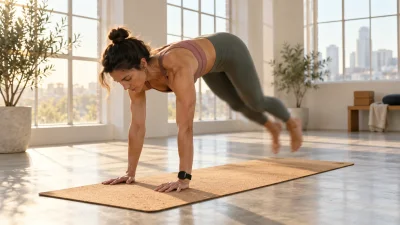
On June 21, millions of people across nearly 190 countries will roll out a mat, find a patch of grass in a local park, or simply stand up from a kitchen chair and breathe. The day is a global ritual now, more than a decade old. But this year it carries a pointed message that lands closer to home than usual. The official theme for International Day of Yoga 2026 is "Yoga for Healthy Ageing," announced by India's Ministry of Ayush, with the flagship national celebration set to take place in Kolkata. After years of framing yoga as a pursuit for the young, the lean, and the impossibly bendy, the world's largest wellness observance is turning its attention to a question that eventually touches every one of us. How do we keep moving, thinking, and feeling well as the years add up?
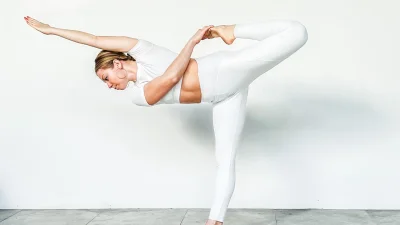
The short answer, and the one worth carrying past the hashtags, is this: you do not need to be flexible, fit, or young to begin. Yoga for healthy ageing is less about deep backbends and photogenic poses and more about the quiet fundamentals that keep a body independent. The ability to balance on one foot. Steady, unhurried breathing. The strength to lower yourself to the floor and get back up without a second thought. Those are the things that decide whether someone stays mobile and self-sufficient at seventy, eighty, and beyond. And a growing body of research suggests a modest, consistent practice can help protect them.
This is not a ceremonial choice. The World Health Organization projects that the number of people aged 60 and older will roughly double to 2.1 billion by 2050, a demographic shift unlike anything in human history. The harder truth buried in that statistic is that longer lives are not automatically healthier ones. The WHO has been candid that there is little evidence the added years are being lived in noticeably better health than previous generations enjoyed at the same age. Living to ninety is one thing. Living to ninety while still gardening, traveling, and carrying your own groceries is another entirely.
That gap is exactly where a practice like yoga earns its place. The same Ministry of Ayush program that named the 2026 theme also coordinates the Common Yoga Protocol, the standardized 45-minute sequence demonstrated by thousands of practitioners at the official launch and taught worldwide every June 21. It was designed to be accessible across age groups and fitness levels, which makes the day itself a low-pressure entry point for anyone who has been curious but hesitant.
The evidence here is encouraging without being magical, and it is worth being precise about. A systematic review and meta-analysis published in the journal Age and Ageing found that yoga-based exercise improves balance and mobility in people aged 60 and over, two of the strongest predictors of independence in later life. The honest caveat from the same researchers is that more work is needed to confirm whether those balance gains translate directly into fewer falls, so this is a promising signal rather than a closed case.
Other studies point in the same direction. Unintentional falls affect roughly 30 percent of people over 65, and a randomized pilot of an eight-week Hatha yoga program in a rural older population reported fewer self-reported falls among participants over the following months. More recently, a 2026 controlled study of adults aged 65 to 85 found that a 12-week program combining gentle postures, breathing practices, and meditation produced significant improvements in balance and functional mobility, along with measurable reductions in fear of falling, anxiety, and depression. That last cluster is easy to overlook. The confidence to move without bracing for a stumble is itself a form of freedom, and fall prevention is as much psychological as it is physical.
What ties these findings together is the dose. The trials that show results tend to run eight to twelve weeks, with sessions of 45 to 60 minutes, two or three times a week. That is a genuinely achievable rhythm for almost any retirement-stage lifestyle, and a fraction of what many younger practitioners assume yoga demands. As we have written before in our deep dive on a month of consistent practice, consistency is where the benefits actually live. The body responds to showing up, not to intensity.
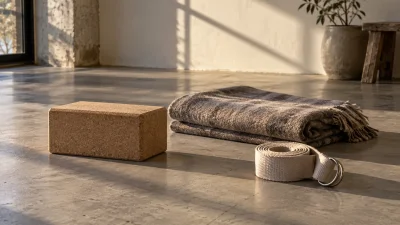
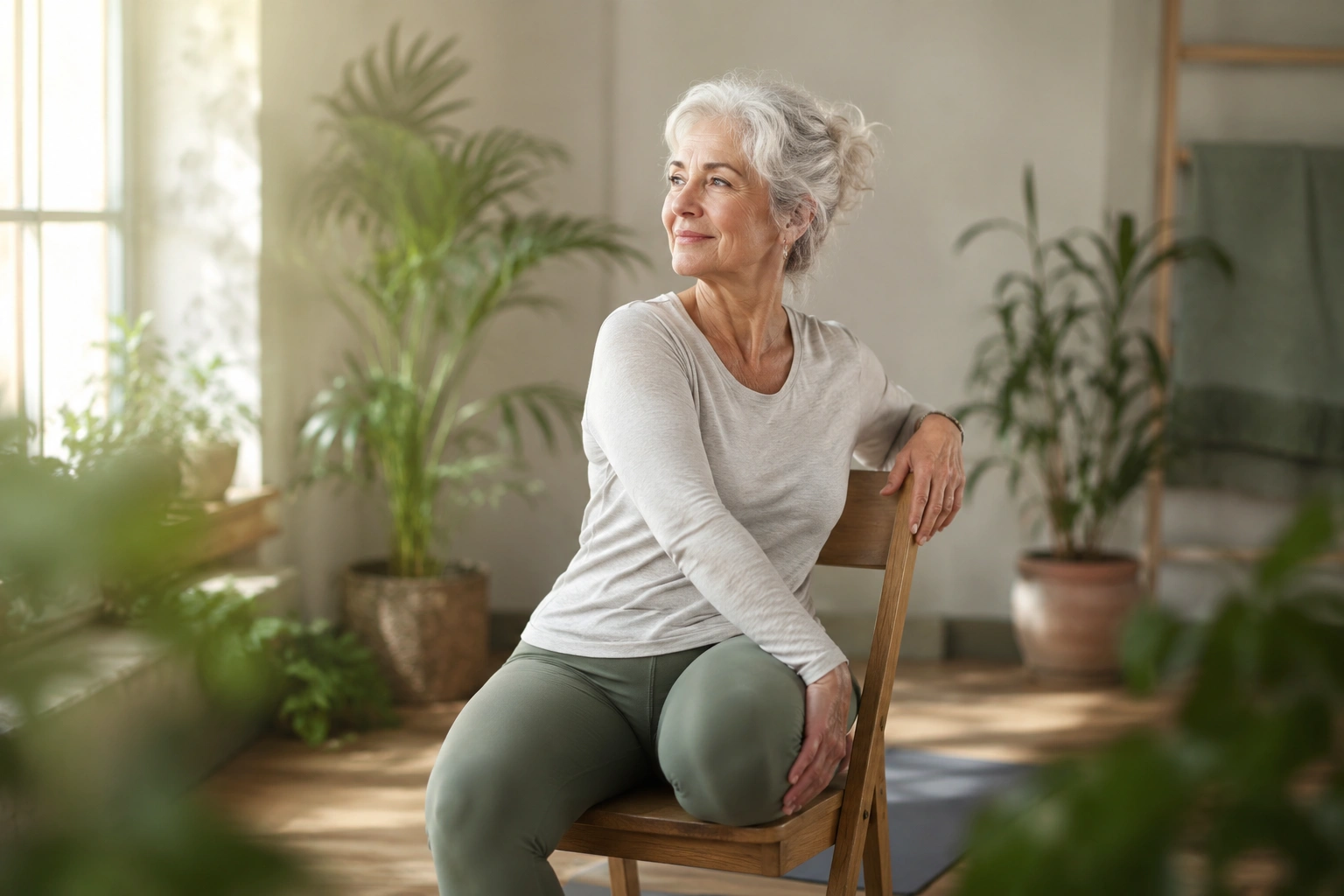
If the word yoga conjures images of someone folded into a pretzel, set that aside. The styles best suited to healthy ageing are the least dramatic ones. Chair yoga keeps a sturdy seat underneath you the entire time, building strength and range of motion without the risk of getting down to and up from the floor. Gentle yoga and slow Hatha move at a deliberate pace with plenty of pauses, ideal for joints that need warming up rather than wrenching. And restorative yoga, which uses props to support the body in long, comfortable holds, leans into the nervous system side of the practice, the slow breathing and rest that help shift the body out of chronic stress and into recovery.
Most studios now run dedicated tracks under names like "Yoga for Seniors" or "Gentle Flow," and the safest first step for anyone new or returning after a long break is one of those, ideally with an instructor who can offer modifications. There is no prize for forcing a pose. The goal is a body that feels steadier walking down the stairs next month, not a perfect photo today.
International Yoga Day events are typically free and easy to find. Studios, parks, libraries, embassies, and community centers host sessions, often outdoors, and many welcome complete beginners with no expectation that you have ever touched a mat. If a class feels like too much, too soon, you can follow the Common Yoga Protocol at home through any of the official streams, or simply spend ten minutes on slow breathing and a few supported stretches. The point of the day is not performance. It is the invitation.
If you have talked yourself out of trying because you assume you are too stiff or too late, that story deserves a second look. We made the full case in our piece for people who think they cannot do yoga, and the gist applies double here: the practice was built for the body you have right now, not the one you think you are supposed to have. Starting in your sixties or seventies is not a compromise. For the goals that matter most in later life, it may be the best time to begin.
A few practical notes can make the difference between a one-day novelty and a habit that sticks. Hydration matters more than most beginners expect, especially for older bodies and during outdoor summer sessions, and our colleagues over at H2 Goals cover recovery and fluid balance in useful detail. So does supporting the body between sessions through good sleep, sensible movement, and joint care, an area where natural wellness approaches can complement a regular practice rather than replace it. None of this is complicated. It is simply the difference between treating yoga as an event and treating it as part of how you live.
There is something quietly radical about a global movement choosing to spotlight ageing in a culture that so often treats it as a problem to hide. The 2026 theme reframes the later decades not as a slow decline to be managed but as a long stretch of life worth moving through with strength and clarity. Beginner yoga is one of the rare practices that becomes more relevant, not less, as the body changes.
So when June 21 arrives, you do not need a fancy mat, a flexible spine, or a single prior class. You need a few quiet minutes, a willingness to breathe, and the smallest bit of curiosity about what a steadier, calmer version of yourself might feel like a few months from now. That turns out to be enough. It always was.